


Living with someone messy: concrete solutions
When you're naturally tidy, living with a messy person can quickly become a source of stress. But is messiness really a fault? Or is it simply a difference in functioning that needs to be understood and tamed?
Some people claim their "creative chaos". They say they find themselves there, feel free and less stressed. Others, on the contrary, need a structured environment to feel good and serene.
In this blog, I approach this theme with nuance and kindness, because living together - as a couple, a roommate or a family - also means making compromises. Whether you're the neatest person in the house or the most spontaneous when it comes to tidying up, there's room for harmony.

Is being messy really that bad?
We often hear:
"I'm more creative in my mess."
"I operate like that, and it doesn't stop me from being efficient."
And it's not untrue. Some studies show that slightly untidy environments can stimulate creative thinking and encourage new ideas. For many, a space that's too perfect can even seem stifling or unwelcoming.
That's why it's important to distinguish between tolerable clutter and real clutter that is detrimental to quality of life. A bit of clutter on a desk, a pile of laundry on a chair... it's normal, it's human. But when you accumulate to the point of not being able to move around freely, or of constantly losing essential items, you cross another boundary. In extreme cases, we even talk about Diogenes syndromea hoarding disorder requiring professional support.
But in most cases, the daily "mess" is a different way of life, not a lack of respect. And that's where communication becomes essential.
What the order can do for you
While clutter may sometimes seem harmless, several studies also confirm the benefits of an organized environment:
- Improved concentrationfewer visual stimuli = greater mental clarity.
- Stress reductionKnowing where things are reduces cognitive load.
- Better sleepAn uncluttered room helps create a sense of calm.
- Time savingno more endless searches for keys or wallets.
It's not a question of aiming for perfection, but rather of creating a functional environment that supports everyone's well-being.
👉 To go further, I invite you to read this article on the link between disorganization and mental health. He explains in depth why the environment in which we live can have a direct impact on our mood, motivation and quality of life.
Why it becomes a problem for two
When we live alone, we can choose our own tolerance threshold for clutter. But as a couple, a family or a flat-share, the way we live affects others too.
For the organized person, clutter can quickly translate into mental overload. Tidying up for two, dealing with other people's chaos, constantly repeating the same instructions... it's exhausting. And it's not just a question of aesthetics: it's a question of comfort, respect for shared space and a feeling of security.
But beware: this doesn't mean that order should automatically take precedence. Rather, it's about recognizing that everyone's needs deserve to be considered. Effective solutions come from listening and discussion.
Tips for living together despite differences
Here are a few concrete ways to reconcile the needs of a tidy and a messy person:
- Define shared and personal zonesEach person can have a "free" space where he or she manages order in his or her own way (e.g. an office, a bedroom, a workshop). Communal areas (living room, kitchen, entrance) can be kept tidier to preserve collective comfort.
- Setting gentle rulesFor example, every evening, we do 10 minutes of express tidying up together. Or we designate a weekly cleaning day.
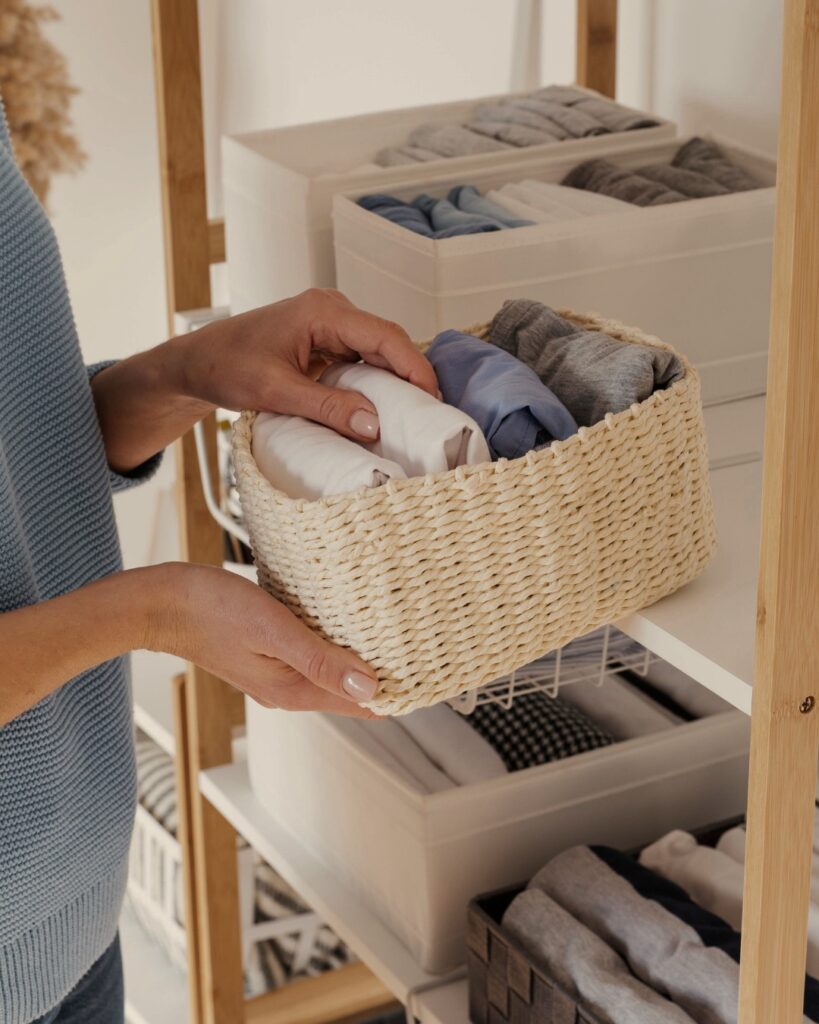
- Use bins or basketsFor people who hate putting things away in drawers, these visual containers are a simple solution for keeping things together without everything lying around.
- Communicating without reproachAvoid accusatory phrases such as "You never tidy anything up", and prefer phrases like "I need more order in this room to feel comfortable".
These small gestures, applied consistently, can make a real difference.
No one should be forced to change his or her inner nature. If your partner is naturally messy, he or she will probably never become a minimalist.
But in a healthy dynamic, you can inspire the other person, gently. By example, by listening, and by finding solutions together. You can suggest a new way of tidying up that works for both of you, or choose a room to tidy up together.
And sometimes professional services can really help. As an organization expert, I see it every day: neutral help can unblock certain tensions, find personalized tips, and restore harmony in the home - and sometimes even in the couple.
A calmer everyday life for two
Living with someone who's a mess doesn't have to be that way. With a little tolerance, communication and adaptation, it's perfectly possible to live together peacefully - even if your organizational needs are very different.
The important thing is not to achieve a Pinterest ideal, but to create a cocoon that reflects you... together.
And if you feel that the clutter is weighing too heavily on your daily life, don't hesitate to ask for a helping hand. I'm here to support you, without judgment, with practical solutions adapted to your reality.