
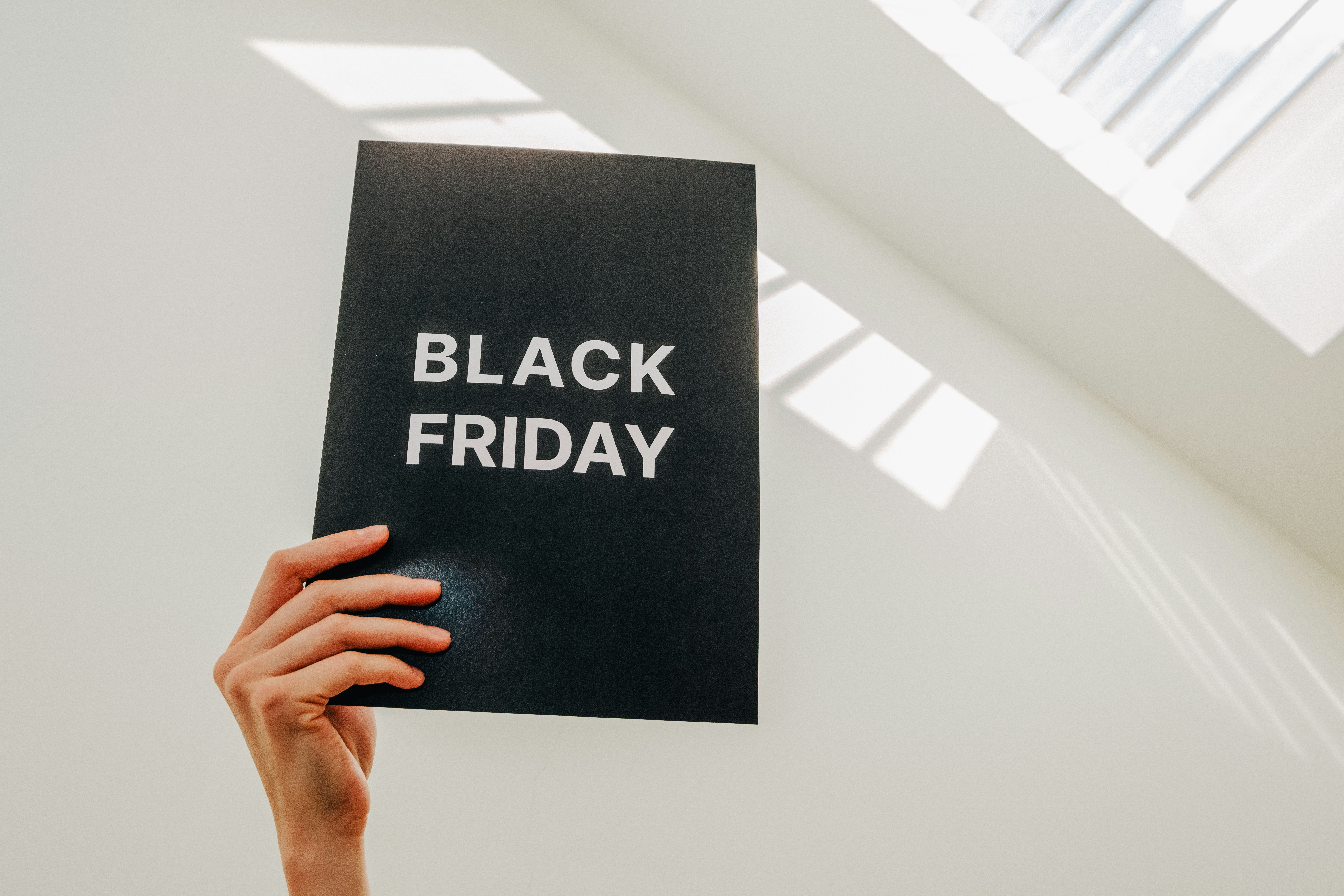
Black Friday: save money or just buy more?
Does Black Friday really allow us to save money? If an item that was $100 $ is reduced to $60 $, have we saved $40 $… or spent $60 $ that we would never have spent otherwise?
It’s a simple question, but one that deserves some thought, especially as Black Friday approaches, also known as Crazy Friday in Quebec.
Every year, promotions multiply. We are told about exceptional discounts, limited-time offers, and opportunities that simply must not be missed. It’s hard not to be tempted!
I assure you, I also like to make good deals. When an item that I really need is offered at a reduced price, I am the first to appreciate the savings made.
However, through my work of helping people declutter their homes, I have learned one thing: Just because an item is on sale doesn’t mean it represents savings.
And what if, this year, we took advantage of Black Friday to think about our way of consuming a little?
Why is it so difficult to resist discounts?

Has it ever happened to you to buy something simply because the price was too good to pass up?
Retailers know very well how to attract our attention. The mentions “Limited quantities”, “Last chance” or “50 % % off today only” create a sense of urgency.
We fear missing an opportunity. We think that we might eventually need that item, that it would be a shame not to take advantage of the price or that we might never find such a good offer again.
The result: sometimes we buy things that we wouldn’t have even thought of a few minutes earlier.
That is exactly what makes me think of the book by Pierre-Yves McSween, Do you really need it? A question that we all would benefit from asking ourselves a little more often!
Because in the end, The real issue is not always the price of the object, but the reason why one decides to buy it.
A good bargain remains a good bargain!
I am certainly not here to tell you to boycott Black Friday or to stop taking advantage of the promotions.
On the contrary!
Imagine that your vacuum cleaner is no longer working and that you have been planning to buy a new one for several weeks. The model you want normally costs 300 $, but you find it for 200 $ during Black Friday.
You have actually saved 100 $ on a spending item that you had already planned for.
Now, imagine that you have a perfectly functioning vacuum cleaner, but you buy a second one because it’s half price.
Have you saved money? Not really. You mostly added an extra object to your home.
The difference is that in the first case, the discount meets a need. In the second case, it is the discount that creates the need.
And this distinction is particularly important when trying to avoid accumulation.
What I discover in the houses during the clean-up operations
In my work as a professional organizer, I am regularly confronted with the consequences of our consumption habits.
You would be surprised to see all the things you can find in a house!
Items still in their original packaging, clothes with their labels attached, accessories bought 'just in case', products that are duplicates... and sometimes even a dozen of them!
Why did I buy so many of them? Often because they were special editions.
At the time, the purchase seemed quite reasonable. After all, why pay full price later when you can make reservations now?
The problem is that these items sometimes end up forgotten at the bottom of a cabinet, drawer or wardrobe. We don’t even remember having bought them!
And when it comes time to clean up, some people realize that they have spent hundreds, if not thousands of dollars on things they never used.
I am not telling you this to make you feel guilty. We have all made purchases that we have regretted.
It’s simply a reality that I observe very often: Accumulation does not necessarily happen in a single day. It is built up, one small purchase at a time.
And what’s interesting is that even when we realize that we don’t need certain items, it’s not always easy to let them go. We think about the money spent, we tell ourselves that we might eventually need them, or we simply feel an attachment to them.
This is actually a topic that I discuss in more depth in my article. Attachment to objects: seeing clutter in a different way.
The true cost of an object exceeds its purchase price
We often think only of the amount listed on the label, but much less of everything that comes after.
Because once you’ve bought an object, you need to find a place for it.
It must be stored, sometimes cleaned, maintained, moved, and eventually decided what to do with it when it is no longer needed.
The more we accumulate, the more time we have to manage what we have.
And believe me, when you start to find some space in your home, you realize how precious that space is!
Black Friday and No-Shopping Day: two ways of looking at consumption
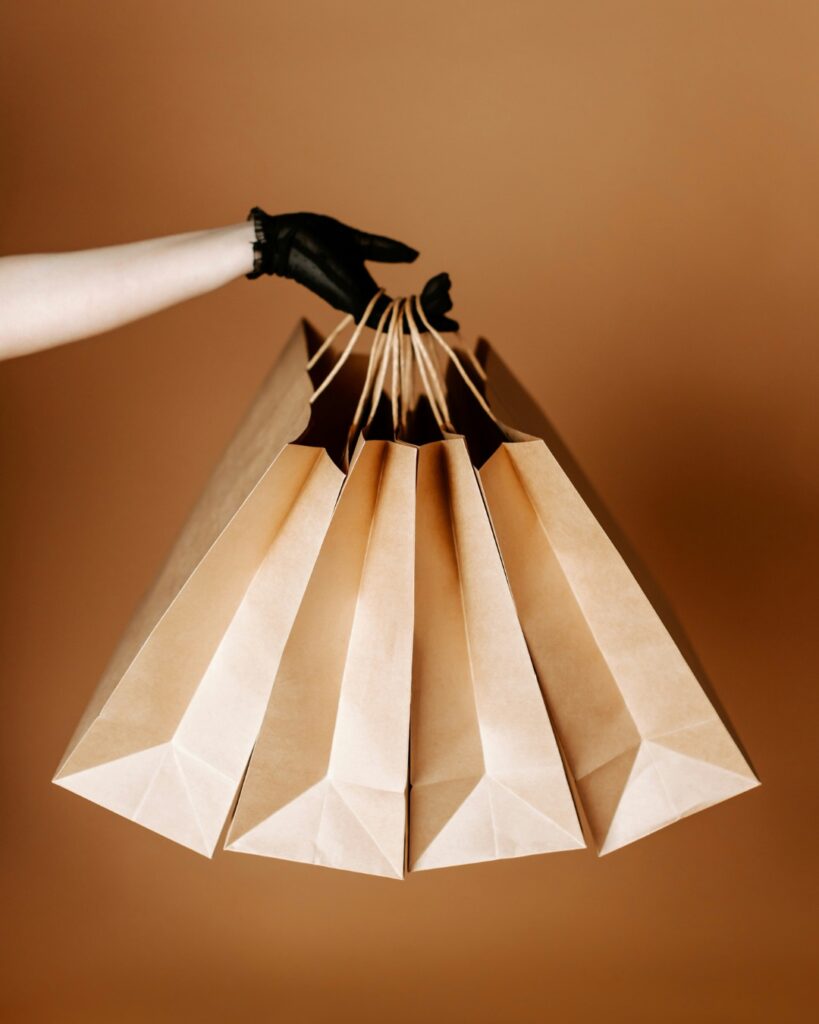
Did you know that there is also a No-Shopping Day, traditionally associated with the same period as Black Friday?
While businesses encourage us to buy more, this initiative instead invites us to reflect on our consumption and to question our true needs.
I find the contrast particularly interesting.
On the one hand, we are presented with all the savings we could make by buying. On the other hand, we are reminded that the best savings are sometimes those of not buying anything at all.
This does not mean that one has to choose a side.
You can enjoy a good promotion while being aware of your consumption habits. You can also decide to take advantage of Black Friday to buy only what you really need.
In my opinion, the important thing is to make informed choices rather than being carried away by the urgency of promotions.
Four questions to ask before going to the cashier
I propose a small exercise to do during your next purchases, whether during Black Friday or at any other time of the year.
Before buying an item, ask yourself these four questions:
1. Did I want this item before seeing the discount?
If you had never considered this purchase before discovering the promotion, take a few moments to think about its real usefulness.
2. Do I already have something that fulfills the same function?
We sometimes have a tendency to forget what we already have, especially when our storage spaces are cluttered.
3. Where will this object live in my house?
That’s one of my favorite questions! If you don’t know where to put your new purchase, it might be a sign that your space is already well-filled.
4. Would I buy it if it wasn’t on sale?
This last question often helps to distinguish a genuine need from a desire caused by the discount.
You don’t need to forbid yourself from having all those little pleasures. It’s simply a matter of getting into the habit of thinking before adding anything to your daily routine.
And what if the best economy was to take advantage of what we already have?
As Black Friday approaches, I invite you to take a little tour of your home.
Open your cabinets, look at what is at the bottom of your drawers, and take a few minutes to rediscover what you have.
You might find items you had forgotten about, products that are still new, or things you thought you had to buy.
It is also an opportunity to do some tidying up and free up space for what is truly useful to you.
Because in the end, decluttering isn’t just about getting rid of things we no longer want. It’s also about learning to better understand what we have and, sometimes, to bring in a little less stuff into our homes.
So this year, take advantage of the good deals if they meet your needs. Treat yourself on occasion, without feeling guilty.
But remember that a 50% discount % on an unnecessary item is still 100 % in a spending you could have done without!
Et vous, avez-vous déjà acheté quelque chose uniquement parce que c’était en spécial? 😉