

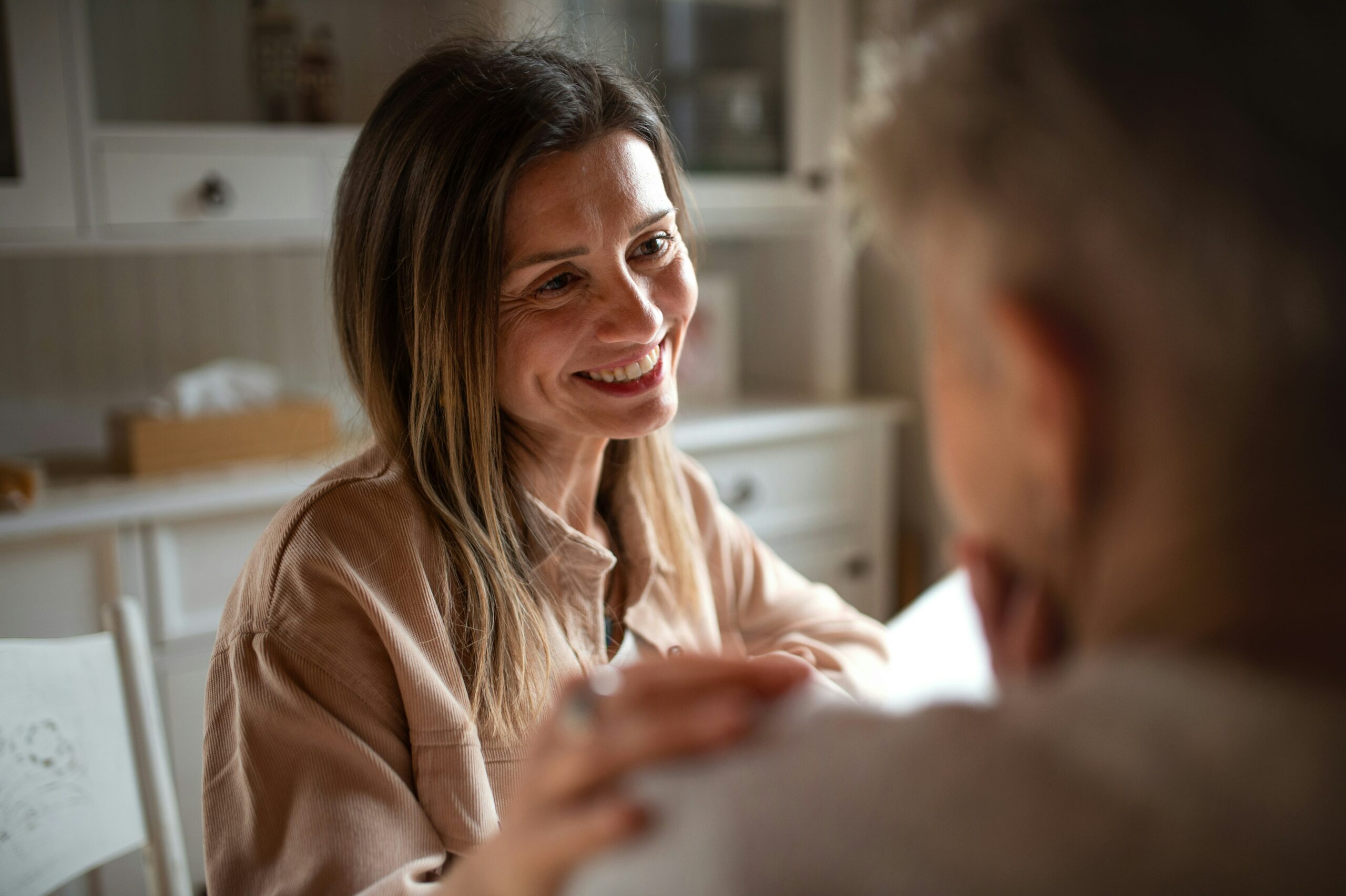
Preparing his succession through downsizing
When we talk about preparing our succession, we often think of wills, insurance policies or legal documents. These are obviously important elements, but there is also everything we leave behind in our daily lives: a house filled with belongings, boxes of photos, accumulated papers, memories, digital accounts and sometimes several years of things to sort through.
In my work as aprofessional organizerI realize how heavy this reality can be for the loved ones when a death occurs.
Therefore, organizing and keeping things in order in one’s own life is not just a matter of personal convenience; it is also a way to simplify things for those we love.
Cleaning up to leave no years of sorting through the trash behind us
We all accumulate things over the years. Some are useful, others have sentimental value, and many simply remain there because we never took the time to decide what to do with them.
The problem is that one day, someone will have to make those decisions.
Is this tableware of special value? Did anyone want to keep this piece of furniture? Why has this box been kept for 20 years? Can these clothes be given away? And what do we do with everything that remains?
After a death, these seemingly simple decisions can become much more difficult.
Regular decluttering helps us keep what truly matters and gradually get rid of what no longer has a place in our lives. There is no need to empty our house or become a minimalist. The goal is simply to avoid passing on hundreds of decisions to be made with our possessions.
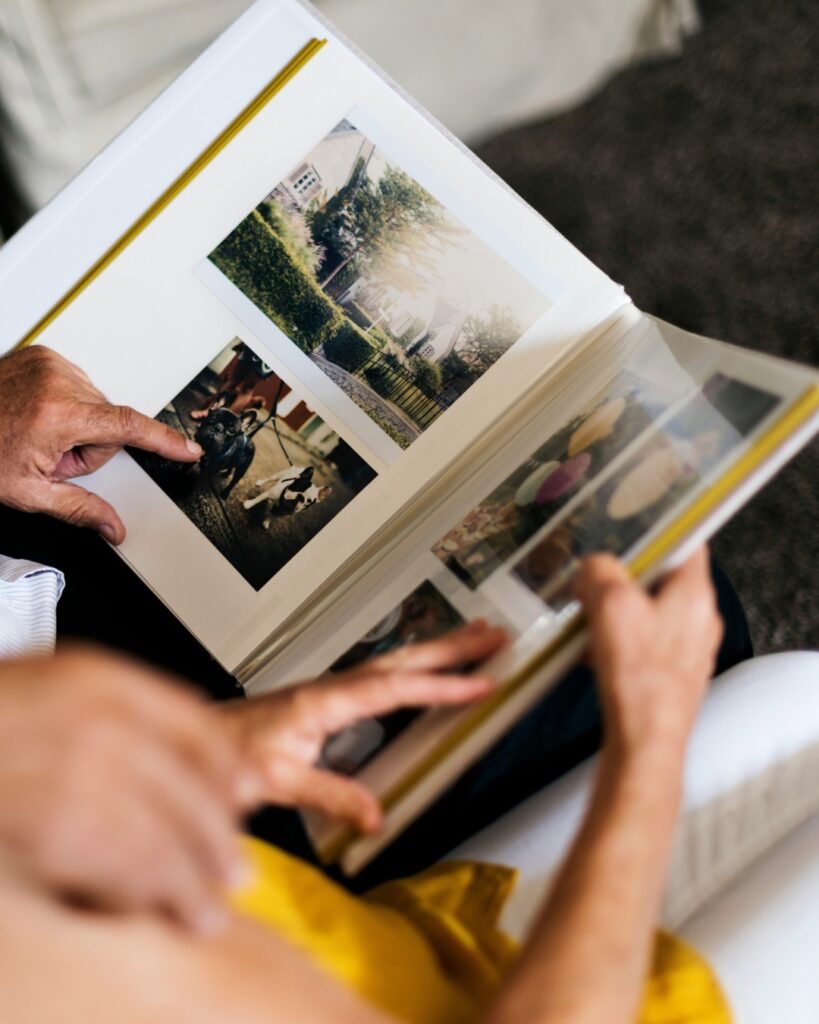
Sorting through our memories while we can still tell their story
The sentimental objects and photos are often among the most difficult items to sort through after a death.
A photo can be very valuable when you know who is in it and in what context it was taken. Without this information, it can become almost impossible to identify it a few years later.
That is why I find it particularly interesting to do this sort of thing with their parents or close relatives while they are still present.
It is possible to identify the people in the old photos, add dates, keep only the images that actually tell a story, and eliminate duplicates, blurry photos, or those that no longer really have any meaning.
The same goes for objects. A person can explain to us why they hold on to a piece of jewelry, a piece of furniture, or a travel souvenir. Sometimes we discover stories that we would never have known otherwise.
These discussions also allow for the person to know what they want to convey and to whom. They give meaning to the objects instead of leaving the loved ones to try to guess it later.
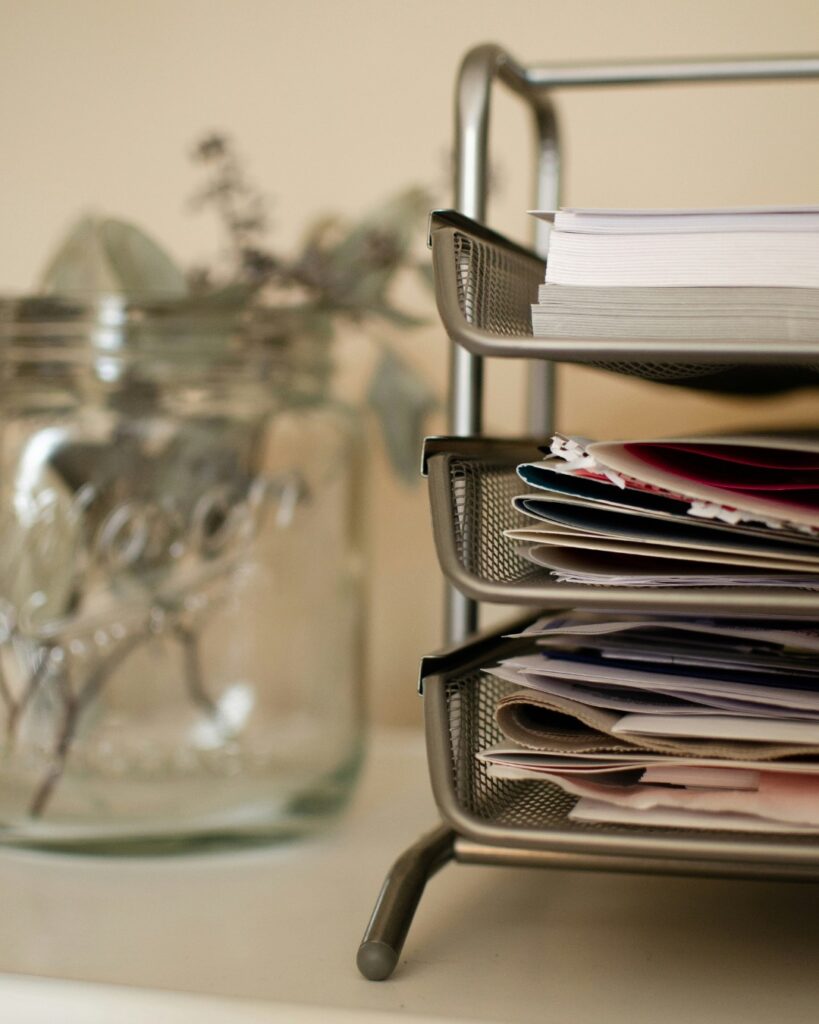
Organize your papers and important documents
With the passage of time, the paperwork can quickly accumulate: contracts, invoices, bank documents, insurance policies, guarantees, declarations, documents related to the house…
Performing a periodic cleaning helps to eliminate what no longer needs to be kept and, above all, to gather important documents in a logical and known place with someone you trust.
It can also be useful to compile a list of the information that your loved ones might need: financial institutions, insurance companies, subscriptions, people to contact, and other important information.
The goal is not to have everything perfectly organized. Above all, you need to avoid having your loved ones have to rummage through every drawer and every box to try to understand what is important.
Don't forget your digital life
Today, a significant part of our business no longer exists in a folder.
Our photos may be in the cloud. Our invoices arrive by email. We have accounts on social media, subscriptions, files on a computer, and dozens of accounts protected by passwords.
This part of our lives also deserves a little organization.
It may be pertinent to consider how a trusted person can retrieve the necessary information when needed. What accounts exist? Where are all the passwords? Where are important documents kept? Where are the family photos? What subscriptions will eventually need to be cancelled?
We rarely think about these questions until the day when someone has to try to reconstruct our entire digital life.
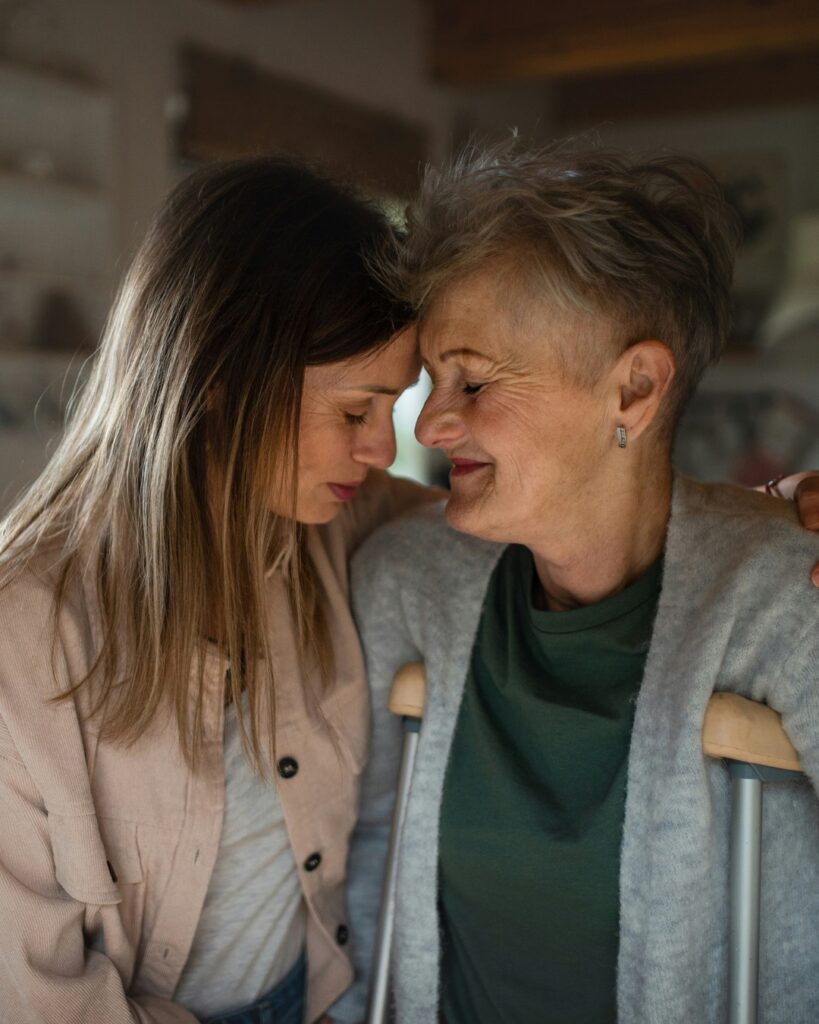
Having these discussions with his parents
I know that these are not necessarily easy conversations to have.
Asking their parents what they want to do with their belongings or offering to start sorting out some things can give the impression that you are already thinking about their death. However, this is by no means necessary.
You can simply start with a box of photos. With a wardrobe that is overflowing. With papers that they have wanted to sort for a long time.
Clearing out the clutter can become an opportunity to chat, tell stories and pass on memories. It especially allows you to make these decisions together, without urgency.
And often, the parents also immediately benefit from this approach: a house that is easier to maintain, more functional spaces, and the peace of mind that their belongings are a bit better organized.
When the death has already occurred
It obviously happens that the sorting has not been done before.
After the death of a loved one, one may then find oneself cleaning out an entire house. And it’s not just a question of tidying up.
Every object can bring back a memory. A simple cup, a garment, or a piece of paper can suddenly become difficult to let go of. Yet one must move forward, sometimes within a relatively short timeframe, while also dealing with grief and the decisions that already accompany this period.
It is quite normal for the process to take on an emotional dimension.
It is often in this context that families turn to me. They find themselves in front of a house or apartment to be vacated and simply don’t know where to begin. I am accustomed to accompanying people in this situation and I know how different the sorting process can be when it is linked to grief. Sometimes it is necessary to take the time to stop in front of certain objects, to tell a story or to consult with other members of the family before making a decision. My experience allows me to provide some structure to this stage, while respecting the rhythm and reality of each family.
In these situations, my role is not to decide for the families what should be kept or thrown away. I can rather help them sort through the items, structure the process, and help them move forward one step at a time.
This can include grouping what will be kept by family members, identifying what can be given or recycled, sorting the papers and photos, and gradually organizing the spaces to be emptied.
Putting things in order also means taking care of others
Preparing for his succession doesn't necessarily mean getting everything sorted out in a weekend.
We can start quietly.
A photo box. A folder of documents. A wardrobe. A list of important accounts. A conversation with his children or his parents.
Every small decision made today is one less that someone will have to make in a potentially much more difficult moment.
For me, that’s what disburdening is all about: choosing what we want to keep, pass on, and leave behind.
And when a family has to do this work after the death of a loved one, StéZen can be there to help them sort through and clear away the clutter, with respect, gentleness, and no judgment.